
Data Access
Bringing Data Back Into Nation Hands
Many datasets relevant to First Nations governance already exist, but they are often fragmented across various institutions. Information about housing, education, health, land use, or demographics may be held by federal or provincial governments, academic institutions, or private organizations.
For many Nations, locating these datasets and navigating the processes required to access them can be time-consuming and complex. Requests often involve multiple agencies, formal agreements, and technical processes that Nations may not have the capacity to pursue.
The BC Regional Information Governance Centre (BC RIGC) works to simplify this process by helping Nations identify, access, and use datasets that can support governance and planning.
Supporting Data Access Through the BYODC
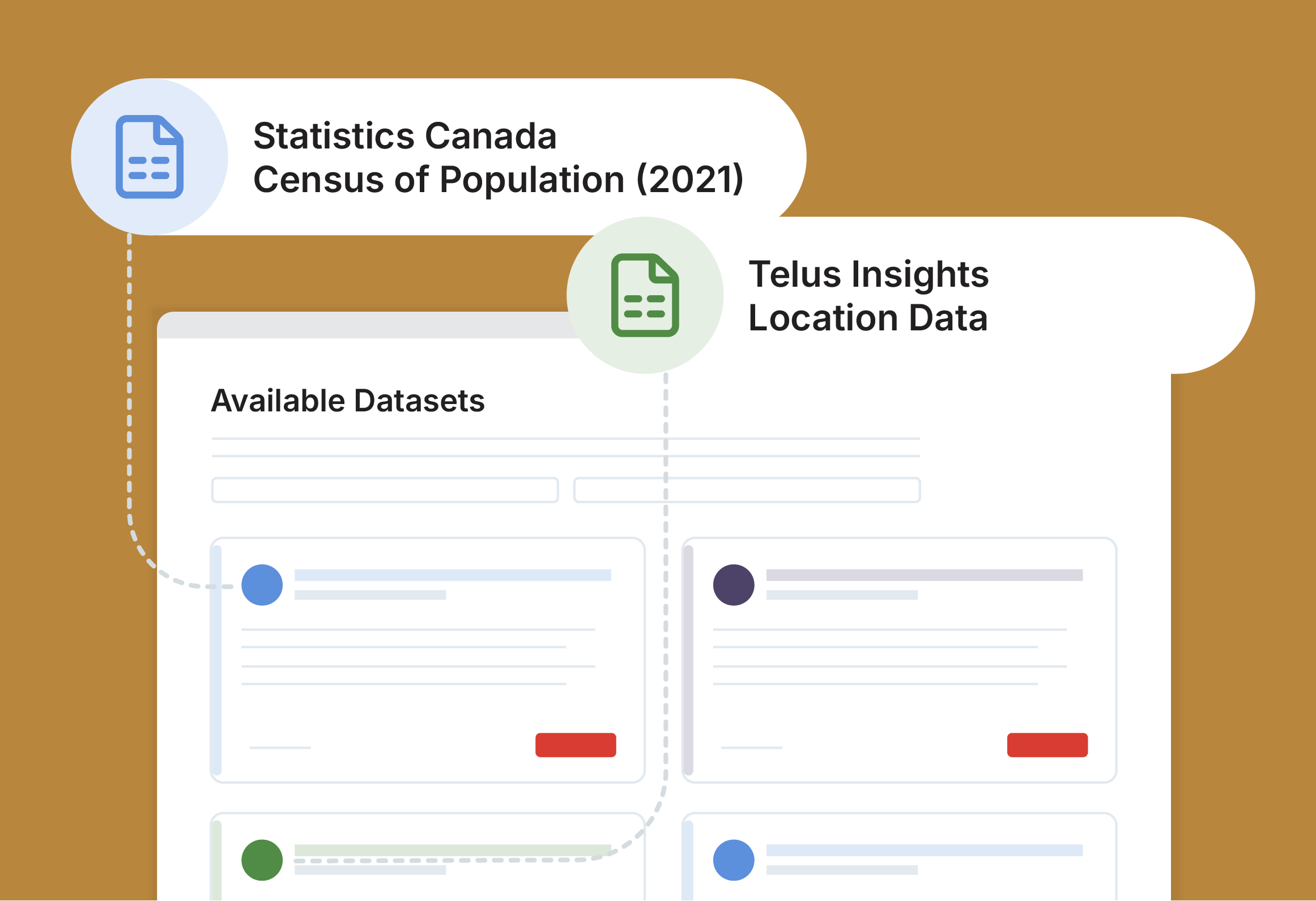
The Build Your Own Data Centre (BYODC) helps make relevant datasets more accessible to Nations in two ways. Where datasets are publicly available, the BC RIGC works to integrate them directly into the platform so they can be explored and visualized alongside other information. For datasets that require permissions or formal requests, the platform can facilitate data access requests. At the request of Nations, the BC RIGC team can help identify relevant datasets and support the process of pursuing access with the institutions that hold them.
This approach helps reduce the time and administrative burden involved in locating and obtaining information that may already exist.

What Partner Nations Say:
“The RIGC platform is helping us bring all of our data together — from surveys, RHS, and other sources — so we can actually use it to inform our plans.”
— Project Lead, Ulkatcho First Nation
Access, Exploration, and Visualization
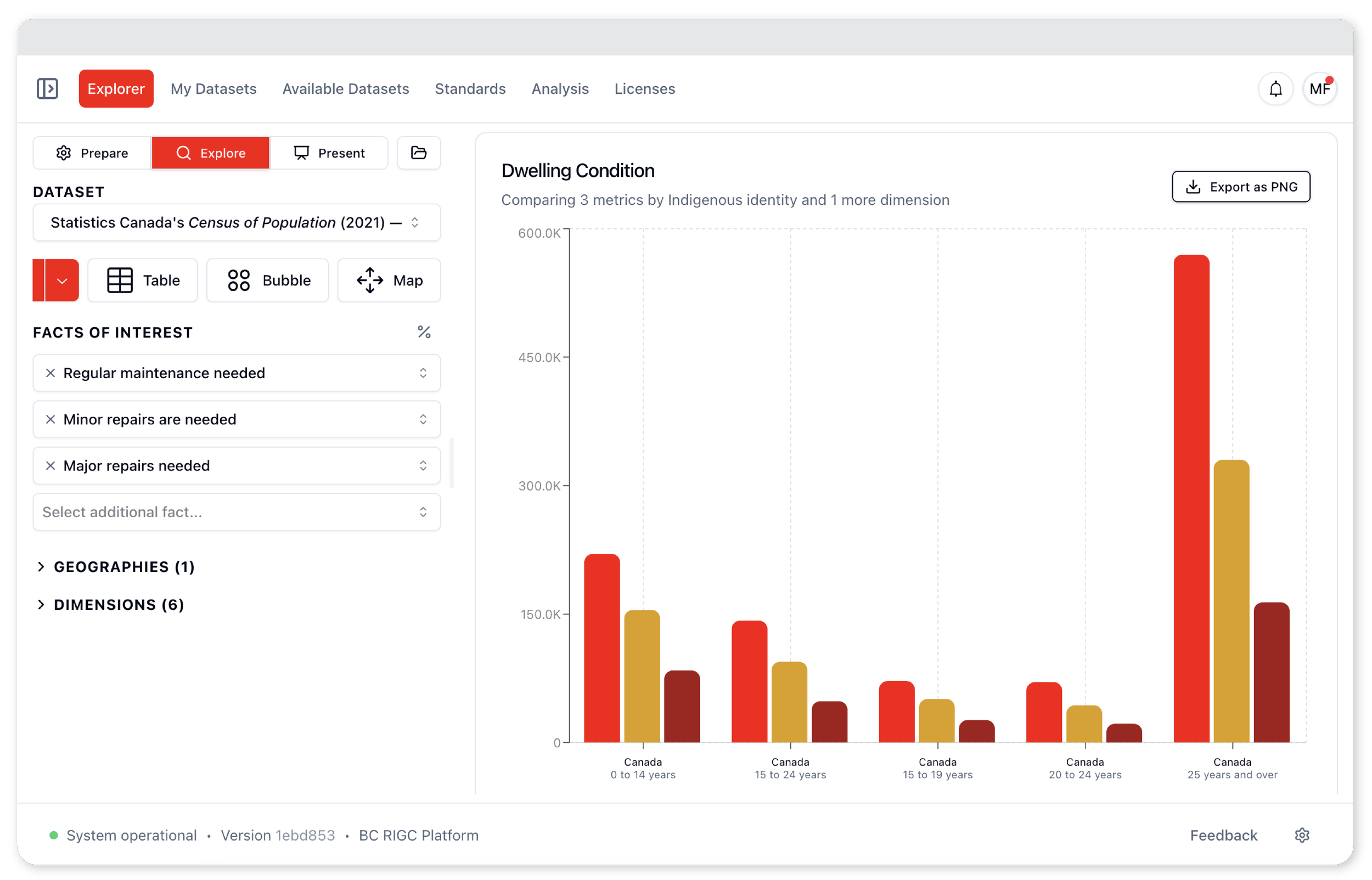
The platform supports not only access to datasets, but also tools that help users explore and interpret the information.
Through the BYODC, users can:
access datasets relevant to governance and planning
explore data through interactive charts and visualizations
combine external data with Nation-held information
use datasets to inform planning, research, and decision-making
By making data easier to locate and interpret, the platform supports more informed and timely governance decisions.

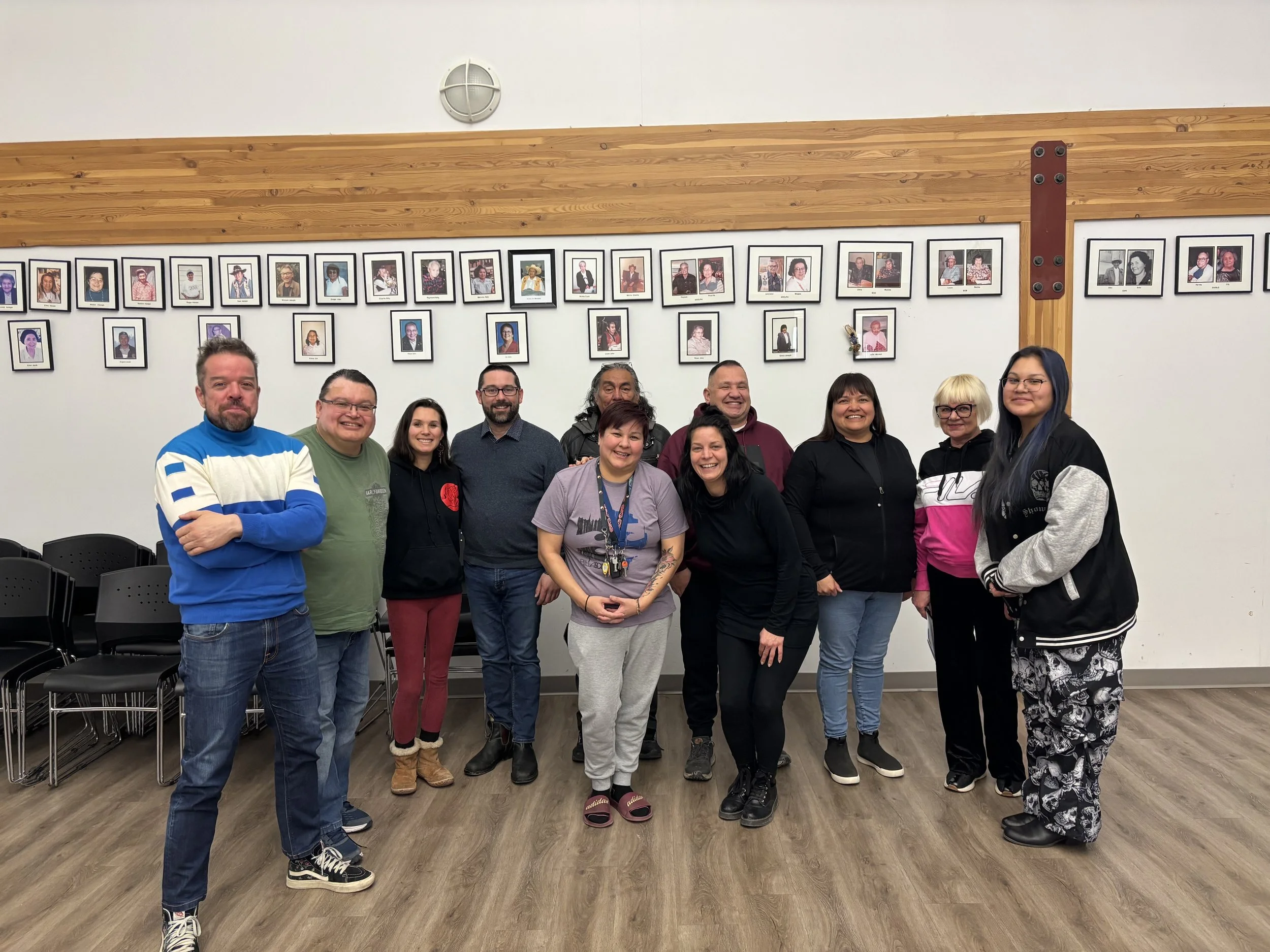
Supporting Nation-Defined Data Priorities
The BC RIGC continues to identify datasets that may be useful for First Nations governance. Nations are also encouraged to identify datasets that would support their priorities.
Where possible, the BC RIGC can help explore options for accessing those datasets and work with partners to establish pathways for responsible data sharing.
Examples of Available Datasets
The BC RIGC has begun identifying and integrating datasets that may be useful for First Nations governance in British Columbia. Examples include:
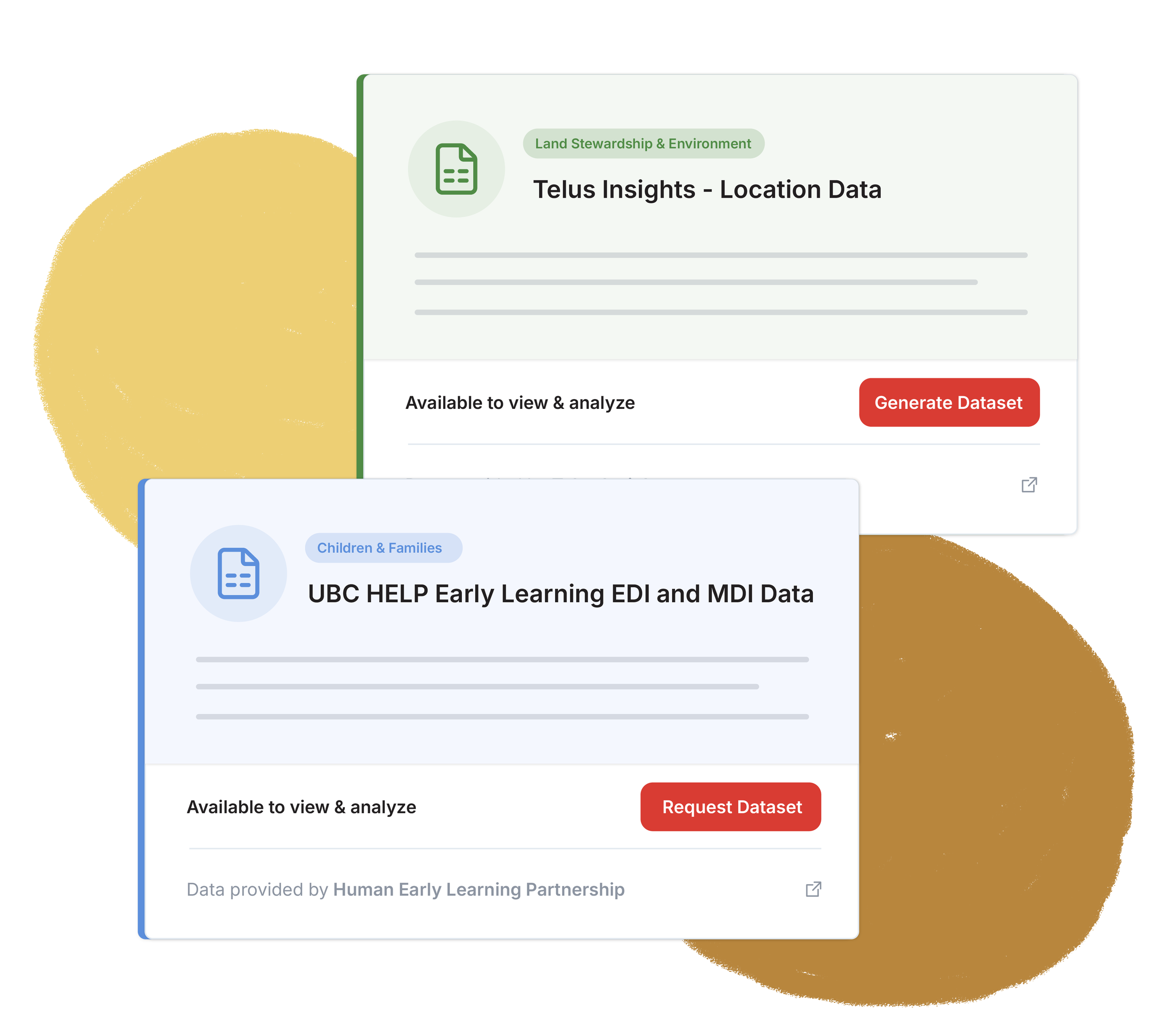
TELUS Data for Good
Aggregated mobility and population movement data that can help Nations understand patterns related to transportation, regional activity, and community connections.
UBC HELP Data
Early childhood development data that can support planning related to education, child development, and community wellbeing.
Statistics Canada Census Data
Population and demographic data that can support long-term planning in areas such as housing, infrastructure, and services.
Additional datasets will continue to be added as partnerships and access pathways are established.
Learn More
If your Nation is interested in accessing existing datasets or exploring how external data can support planning and governance, the BC RIGC team would be happy to discuss available options.